Open kitchens: the trend that transforms your home into a bright and functional space
Open kitchens have become one of the most popular styles in interior design. This layout, which removes the walls between the kitchen and the living or dining room, not only optimises space but also promotes a more social and modern atmosphere. However, like any design, open kitchens have their pros and cons. In this article, we explore their advantages and disadvantages, and offer practical tips to make the most of them.

Advantages of an open kitchen: spaciousness and sociability
One of the main advantages of an open kitchen is the sense of spaciousness it creates. With no walls separating the kitchen from the living room, the space feels larger and brighter. This allows natural light to flow freely, enhancing the overall atmosphere of the home. Additionally, the open kitchen fosters greater social interaction: while cooking, you can engage in conversations with family or guests in the living room, making cooking a more enjoyable and connected activity.
From an aesthetic point of view, open kitchens allow for an integrated design between the kitchen and the rest of the house. This opens up a range of possibilities for creating a cohesive and modern environment, where the decor flows seamlessly from one space to another.
Disadvantages of an open kitchen: odours and clutter in plain sight
Despite their advantages, open kitchens also present some drawbacks. One of the most notable is the spread of odours. Being directly connected to the living room, any aroma from the kitchen can quickly disperse throughout the house. This can be uncomfortable, especially if you are preparing dishes with strong smells, such as fried foods or stews.
Another challenge is that clutter in the kitchen is more visible. Unlike closed kitchens, where you can hide mess out of sight, in an open kitchen any disorganisation becomes a visual focal point that can affect the aesthetics of the home.

Aesthetic and functional solutions for a perfect open kitchen
Fortunately, there are several solutions to minimise these drawbacks without sacrificing the brightness and spaciousness that characterise open kitchens. A popular option is to install a glass wall or a partition screen that prevents the spread of odours and splashes while allowing light to continue flowing through the space. These dividers are not only practical but also modern and elegant.
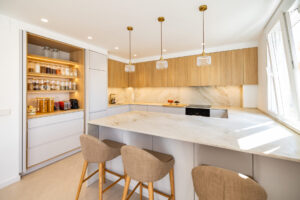
To reduce the visual impact of clutter, storage plays a key role. Cabinets with efficient organisation systems are essential to keep the kitchen tidy and free of visible items. Investing in well-designed furniture with closed finishes can help hide appliances and utensils, keeping the area clean and orderly.
Another effective idea is to use an island or bar in the kitchen that acts as a visual separation between the kitchen and the living room. This solution not only defines the spaces but also offers additional functions, such as storage space or an eating area.
Harmony in design: integrating the kitchen with the rest of the home
The key to making an open kitchen work is to achieve harmonious integration with the rest of the dwelling. The materials, colours, and finishes should be consistent between the kitchen and the living room to avoid a sense of disconnection. A continuous floor, such as wood, or a neutral colour palette that is repeated in both areas can create a smooth and aesthetic transition between the two spaces.
Conclusion: the open kitchen as the heart of your home Open kitchens are an excellent option for those seeking a brighter, more spacious, and social home. Although they present some challenges, such as the spread of odours and visible clutter, there are practical solutions that allow you to enjoy their benefits without compromising functionality. With proper planning and careful design, the open kitchen can become the heart of the house, a modern and welcoming space where light, comfort, and social interaction are the main features.
Open kitchens must comply with the ventilation regulations of the Código Técnico de la Edificación (CTE).
You may also be interested in: innovative coverings and the dwelling of the future.